Mahjong Scapes®
- 4.9
- Rating
- 5.00M
- Installs
- Free
- Price

 Analysis by App-foxy
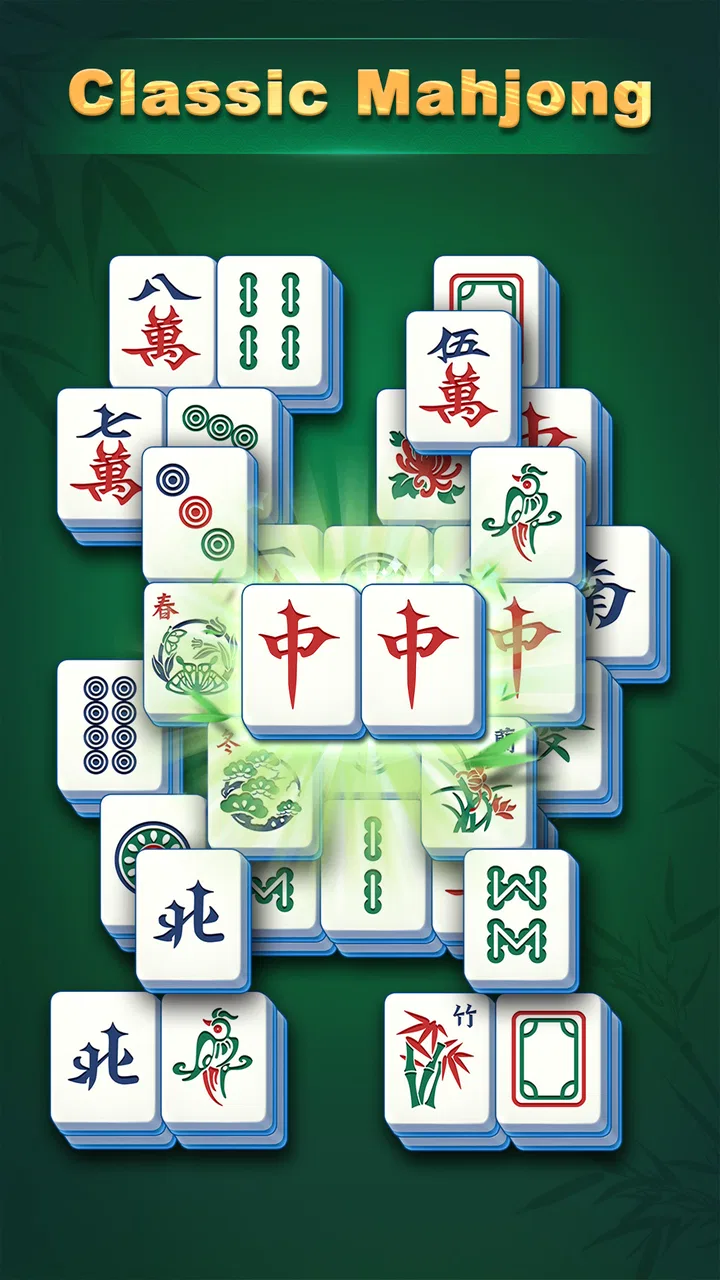
Mahjong Scapes® is the kind of board game I reach for when I want something quiet, focused, and easy to understand without committing to a long session. It turns the familiar Mahjong matching idea into a relaxed mobile experience: find two matching tiles, clear them from the layout, and keep working through the board. That simple loop makes it approachable, but the real appeal is how quickly it settles my attention when I have a few spare minutes.
I reviewed it as a casual player rather than someone looking for a competitive tournament game. My impression is positive, especially for people who enjoy visual puzzles and gradual concentration rather than fast reactions. It is free to start, rated for Everyone, and belongs to the board-game category. PARTYPOP PTE. LTD. is the developer, and the game has built a notably large audience, with over five million installs and an average rating of 4.9 from around 163 thousand ratings.
How Mahjong Scapes® feels during ordinary play
The opening learning curve is gentle because the central action is immediately recognizable. You scan the arrangement, identify an available pair, tap both tiles, and repeat. There is no need to memorize a complicated rulebook before enjoying the first board. That makes it suitable for a short break, a quiet evening, or a player who usually avoids strategy games because they seem demanding.
You May Also Like

 Blood Strike: 2.5 Anniversary
Blood Strike’s Loadouts Turn Every Drop Into a Tactical Gamble
A close look at Blood Strike’s custom loadouts: how fast access to signature weapons reshapes its battle royale rhythm, rewards preparation, and narrows the gap between fights.

 Pandora - Music & Podcasts
Pandora’s Music Is Easy to Start, but Harder to Recover
Pandora’s strength is its low-effort path from a seed to a station. Its weak spot is how much confidence it asks you to place in connection, setup, and quiet recovery.

 8 Ball Pool
 Is Built on Rivalries, Rematches, and Routine
A close look at the rivalries, rematches, shared routines, and unanswered safety questions that turn a quick pool match into a persistent mobile community.

 Samsung Music
’s Quiet Strength Is Playing What You Already Own
Its reach comes less from spectacle than from dependable access to a personal library. That simplicity is both the app’s strongest retention engine and its ceiling.

 AccuWeather: Weather Radar
AccuWeather Review: A Quick, Clear Forecast for Everyday Decisions
For everyday plans, the best forecast is the one you can understand quickly. AccuWeather makes rain timing, radar, and local conditions easy to act on, with a few trade-offs.

 Hill Climb Racing
Why Hill Climb Racing Still Turns Crashes Into One More Run
A tiny car, a bumpy hill and one more upgrade: Hill Climb Racing keeps resurfacing because its simple chaos makes every near-miss feel personal.
More From Our News Desk
View All News


What I like most is that the game asks for attention without making every move feel urgent. I can look across the layout, notice obvious matches, and then slow down when the remaining tiles become less clear. The board gradually changes from a quick visual search into a small planning exercise. A pair that looks useful now may expose several tiles underneath, so choosing between two possible matches is often more important than simply tapping the first pair I see.
That distinction gives the game more depth than a basic matching toy. It is still accessible, but it rewards a deliberate rhythm. I found myself checking which tiles were blocking others before making a move, particularly when several matching symbols were visible. This is one of the less obvious strengths: the game can train patience through its layout, not just recognition speed.
The store summary presents it as a classic Mahjong matching game aimed at focus and brain training. I would treat that as a description of the experience rather than a promise of measurable cognitive improvement. In practical terms, it gives me a reason to concentrate on patterns, compare shapes, and avoid careless taps. That is useful mental exercise, but it should not be confused with a formal training program.
Speed expectations and the right session length
For most players, the perceived speed comes less from action and more from how quickly the board can be read. The controls are simple enough that the game does not feel mechanically demanding. If I am in a hurry, I can make progress through obvious pairs. If I want a calmer session, I can inspect the layout and plan several moves ahead.
That flexibility makes it a good fit for everyday gaps in the schedule. I can imagine playing while waiting for an appointment, during a commute when I am safely seated, or after dinner when I want something more engaging than passive scrolling. A short session feels complete on its own, while a longer one works when I am in the mood to solve several boards in a row.
The trade-off is that this is not the right choice when I want immediate excitement. Players who prefer rapid arcade action, direct competition, or dramatic progression may find the pace too restrained. The pleasure comes from clearing a layout and improving my decisions, not from constant visual spectacle or a race against another person.
One practical tip is to avoid tapping pairs purely because they are visible. I get better results by first checking which tiles are covering others and then selecting the match that opens the most useful area. This small habit changes the game from random pair removal into a more thoughtful board puzzle. It also reduces the frustration of reaching a crowded endgame with fewer options.
What happens when the board demands more attention
The heavier moments are not necessarily the longest ones. A compact board can require more thought than a larger-looking arrangement if the remaining tiles are badly exposed. Near the end of a layout, I often spend more time examining the available pairs than I did at the beginning. That is where focus matters most, because one careless choice can leave a less convenient set of tiles.
I recommend treating the final part of a board as a planning phase rather than a cleanup phase. Before removing a pair, I look for tiles that are partially trapped and consider whether the move will reveal them. This approach is especially useful for players who want the game to feel like a genuine puzzle instead of a sequence of obvious taps.
Longer play sessions can also expose the limits of the formula. The basic matching action remains familiar, so players who need constant novelty may eventually want a different type of board game. I enjoy the repetition when I am using it to unwind, but I would not choose it as my only game if I wanted varied mechanics, social play, or a strong narrative.
Another realistic use case is a shared household device. Because the age rating is Everyone, it is an approachable option for different members of a family, although the actual enjoyment will depend on whether each person likes visual matching. A younger player may appreciate the straightforward goal, while an older player may prefer the slower planning element. It works better as a calm individual activity than as a party game around one screen.
Reliability, recovery, and everyday confidence
My reliability judgment is necessarily practical: the game’s simple board format gives it a clear advantage over more elaborate mobile titles. There are fewer layers to understand, and a player can return to the central activity quickly. That simplicity also makes it easier to resume mentally after a distraction; I can look at the board again and reconstruct what remains without learning a complicated system.
Recovery matters in a puzzle game because interruptions are normal. A phone call, message, or change of location can break concentration. When I return, the important question is whether the current board still makes sense at a glance. Mahjong-style layouts are naturally easier to re-enter than games that depend on a fast reaction window or a chain of timed actions. For that reason, I see this as a better companion for fragmented free time than many action-focused alternatives.
I would still avoid assuming that every interrupted session will feel equally smooth on every phone. Performance can vary with the device, the operating system, and whatever else is running in the background. The confirmed compatibility floor is Android 6.0, and the current version is 3.0.4, so users with older hardware should keep their expectations realistic even though the game itself is not conceptually demanding.
There is also a difference between recovering from an interruption and recovering from a mistake. If I make a poor selection late in a board, the frustration comes from my decision rather than from the controls. That is why I prefer to slow down when only a few tiles remain. A patient approach is more valuable here than trying to increase tapping speed.
Device constraints and resource expectations
Mahjong Scapes® is not the sort of game I would install specifically to test a phone’s graphics performance. Its appeal is the board, the tile arrangement, and the clarity of the matching task. That suggests a lighter everyday role than a visually intensive action game, although I would not turn that impression into a guarantee about battery use, memory consumption, heat, or loading time on every device.
Older Android users should pay attention to the minimum operating-system requirement of Android 6.0. A phone that meets the requirement may still provide a different experience from a newer model, especially if storage is tight or many other apps are active. Before blaming the game for sluggishness, I would close unused apps, update the operating system where possible, and make sure there is enough free space for normal device operation.
For newer phones, the main constraint is likely to be attention rather than hardware. The game is easy to pick up, and that can encourage longer sessions than intended. I have found that setting a personal stopping point works better than waiting until the board becomes repetitive. It is a small but useful distinction: the game may be technically comfortable to run while still demanding more concentration than I planned to give it.
The free entry point is another practical advantage. I can try the core experience without paying first, which is important for a game whose appeal depends heavily on whether I enjoy its pace. In-app purchases range from $0.99 to $99.99 per item, so I would recommend checking each purchase carefully and using device-level spending controls if the phone is shared with children.
That pricing range does not automatically make the game poor value, but it does change how I approach it. I would play the free experience for a while before considering any optional spending. If the basic matching loop already gives me enough relaxation, there is no reason to buy anything simply because it is available. Players looking for a completely purchase-free environment may prefer a different board game.
How it compares with familiar alternatives
Compared with a traditional tabletop Mahjong set, this version is much easier to start. There is no need to arrange physical tiles, find another player, or clear a table. The convenience is excellent for solo play, and the phone handles the visual setup that would otherwise take time. The compromise is that the digital format does not provide the tactile feel or social interaction of playing around a table.
Compared with Sudoku, it is more visual and less number-focused. Sudoku rewards systematic deduction through rows, columns, and regions, while Mahjong Scapes® asks me to recognize pairs and manage what becomes available. I would choose Sudoku when I want a more structured logic puzzle. I would choose this game when I want a softer entry point and a board I can understand almost immediately.
Compared with word games, it also places less pressure on vocabulary. That makes it a better option for players who prefer symbols and patterns, or for moments when I do not want to search for words. On the other hand, word games may offer more variety in the type of thinking they require. The best choice depends on whether I want visual sorting or language-based challenge.
Against fast puzzle games, its strongest advantage is calmness. There is less emphasis on reflexes, so I can focus on the arrangement instead of racing a clock. The weakness is that the experience may feel less energetic. Someone who enjoys quick combos and constant feedback may find a match-three or timed puzzle game more satisfying.
Who should install it, and who should skip it
I would recommend it to casual board-game fans, people who enjoy Mahjong-style matching, and anyone looking for a quiet way to occupy short breaks. It is particularly suitable for players who like a clear objective but still want room to make decisions. The Everyone rating also makes it broadly approachable, although each household should still decide whether in-app purchases are appropriate on a shared device.
I would be more cautious about recommending it to someone who needs multiplayer interaction, a deep campaign, or a large change of mechanics from one session to the next. It is also not my first choice for a player who wants a measurable study tool or a competitive ranking experience. Its value is in the moment-to-moment puzzle routine, not in claims that go beyond that experience.
Players with older Android phones can try it if their device runs Android 6.0 or later, but I would not expect the same comfort from every older handset. If the phone already struggles with ordinary apps, a simple board game may still be usable, yet there is no reason to ignore general device limitations. A newer device should offer a more dependable baseline, while the game’s low-complexity format keeps it less intimidating than many modern releases.
My most useful workflow is to use it as a deliberate reset rather than an endless background activity. I play one board during a short pause, focus on exposing blocked tiles, and stop when I notice that I am tapping without looking carefully. That method keeps the matching mechanic enjoyable and turns the game’s slower pace into an advantage instead of a weakness.
My performance verdict after regular use
Mahjong Scapes® succeeds because it does not overcomplicate the reason people open it. I can begin quickly, understand the board, and choose my own pace. The experience feels more thoughtful when I plan around blocked tiles, and it remains accessible when I only have enough time for a brief puzzle. Those qualities make it a dependable casual option rather than a game I need to study before enjoying.
Its limitations are just as clear. The central loop may become repetitive for players who need frequent novelty, and the calm design will not satisfy anyone searching for action or social competition. The wide range of in-app purchase prices also means I would approach optional spending carefully, especially on a family device. Hardware comfort can differ by phone, so older Android users should keep the minimum operating-system requirement in mind.
Overall, I think it is worth trying because the free starting point lets the matching system speak for itself. I would recommend it to a friend who wants a focused, low-pressure board game for ordinary spare moments. I would skip it only if that friend wanted multiplayer Mahjong, a demanding logic system, or a more varied game structure. For the right player, its strongest feature is simple: it makes a few quiet minutes feel usefully occupied without demanding frantic attention.
FAQs for Mahjong Scapes®
01What is Mahjong Scapes® and how do I play it?
Mahjong Scapes® is a tile-matching puzzle game inspired by the classic Mahjong solitaire. Players are tasked with matching pairs of tiles to clear the board. The game features various layouts and themes, providing a relaxing yet challenging experience. Simply tap on two matching tiles that are free to remove them from the board.
02Is Mahjong Scapes® free to play?
Yes, Mahjong Scapes® is free to download and play. However, it offers in-app purchases for additional features, such as power-ups, extra lives, and ad-free gameplay. Players can enjoy the full game without spending money, but these purchases can enhance the experience.
03What devices are compatible with Mahjong Scapes®?
Mahjong Scapes® is available for both Android and iOS platforms. It supports most modern smartphones and tablets. Ensure your device meets the minimum system requirements specified on the app store page to guarantee optimal performance and gameplay experience.
04Are there any social features in Mahjong Scapes®?
Yes, Mahjong Scapes® includes social features that allow players to connect with friends. You can compete on leaderboards, share your progress, and even send or receive in-game gifts. This adds a fun and interactive element to the game, enhancing the overall experience.
05Can I play Mahjong Scapes® offline?
Mahjong Scapes® can be played offline, allowing you to enjoy the game without an internet connection. However, certain features like social interactions and in-app purchases require an online connection. Playing offline is perfect for uninterrupted gameplay when traveling or without network access.
Pros
- Beautiful graphics enhance user experience.
- Smooth gameplay with intuitive controls.
- Offers daily challenges for rewards.
- Variety of levels to keep you engaged.
- Relaxing music complements the game mood.
Cons
- Limited free hints available.
- Ads can be intrusive and frequent.
- Requires internet for some features.
- In-app purchases can be pricey.
- Levels can become repetitive over time.

Mahjong Scapes®
Gallery